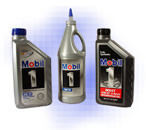
The 3,000 Mile Oil Change Myth – Save Your Money
What do you think about this statement – true or false? To prolong the life of your vehicle, experts recommend that you change your vehicle’s engine oil every 3000 miles.
The answer? False! Modern engines today are much more advanced and don’t require oil changes every 3000 miles, and research has shown that frequent oil changes have no appreciable benefits. The only experts that push for this are those from the oil industry.
The 3,000 Mile Myth
The long handed down concept of the 3000 miles oil change was the brain child of Jiffy Lube and propagated by oil industry officials. While it’s not exactly a scam per-se, it’s quite a lucrative myth for the engine oil maintenance industry. The average American drives 12,000 miles in a year, and with an oil change every 3,000 miles costing in excess of $25 each, that’s $100 annually for each customer. Every visit to the auto mechanic or oil change facility gives them yet another opportunity to push for other pricey maintenance services such as air filter replacement and transmission flush.
Although oil companies and quick engine lube shops like to promote this idea, it’s usually not necessary. Instead, drivers should consult their vehicle owner’s manual oil change schedule for more credible guidance. Most vehicles driven under normal conditions can reliably go 7,500 miles or more between oil changes. Some models now even come with monitoring systems that alert the driver when the oil needs changing. Depending on driving conditions, they can help extend oil change intervals further – to 10,000 or 15,000 miles.
If you want some test trial and research backing, just take a look at what Consumer Reports discovered. They performed an experiment to test engine oil performance in 1996 using New York City taxi cabs. After examining the results, they concluded that:
Even in the severe driving conditions that a New York City taxi endures, we noted no benefit from changing the oil every 3,000 miles rather than every 6,000. If your driving falls into the “normal” service category, changing the oil every 7,500 miles (or at the automaker’s suggested intervals) should certainly provide adequate protection. (We recommend changing the oil filter with each oil change.)
My Vehicle’s Correct Oil Change Interval
I checked out my Honda Accord’s driver’s manual and lo and behold, the car manufacturer recommends oil changes every 5,000 miles for severe driving and every 10,000 miles for normal driving. Every car model’s different, but in my case, my manual indicates that severe driving is characterized as mainly operating the vehicle under the following conditions:
- Driving less than 5 miles per trip, or in freezing temperatures, driving less than 10 miles per trip,
- Driving in extremely hot (over 90 degree) conditions,
- Used primarily as a delivery vehicle or taxi that is driven mostly in stop and go traffic and/or parked with the engine idling,
- Trailer towing, driving with a roof top carrier, or driving in mountainous conditions, or
- Driving on muddy, dusty, or de-iced roads.
My owner’s manual also notes that if you only occasionally drive under the above severe condition, than you should follow the normal driving conditions maintenance schedule. With this in mind, I would consider my driving to be fairly normal with more highway driving than local since I commute to work mostly via public subway transportation. Thus, I now get an oil change every 6,000 miles (a compromise between severe and normal), which comes out to twice a year, and I find it to be very sufficient.


September 25th, 2007 at 12:24 am
The recommended oil change for my car is 5,000 as per owner’s manual and the light does come on every 5,000 miles so I generally follow that rule.
I use to change my own oil but there’s always a coupon or so to get it done for $10-$15 somewhere and oil generally costs around that much.
September 25th, 2007 at 12:33 am
In the oil change department, the car manufacturers have your interest at heart so it’s definitely best to follow the manual. 5,000 miles sounds right. I usually just find a gas station that’ll do it for cheap!
September 25th, 2007 at 7:48 am
I just let Jiffy Lube pay me for my oil changes, check out http://www.conferoinc.com/
(Note, I’m just a mystery shopper at Confero, they do not pay me to advertise).
September 25th, 2007 at 10:15 am
Sick, How interesting! I’m going to have to look into this
October 1st, 2007 at 8:11 am
I have a gas guzzeling truck that I hardly ever drive anymore because of prices. What about the 3 month rule? I have always heard “3000 miles or 3 months, whichever comes first”. I think I have drove my truck 1000 miles or less in a year. Should I consider changing the oil because of it’s age?
October 1st, 2007 at 4:43 pm
Chris, I would change the oil at least once a year if you’re not driving it much.
October 13th, 2007 at 5:35 pm
It is usually recommended every 6 months too. Do you suggest extending this too for those who drive little? Synthetics are often recommended, but given the cost are they really worth it?
December 20th, 2007 at 6:18 pm
I am trying to justify the once a year thing. Does oil have a shelf life? If it is just sitting there and not being used how can it go bad?
December 21st, 2007 at 12:21 pm
I think if the motor oil is stored properly – not too hot, not too cold, it should be okay for several years so long as it is capped tight. I don’t believe they have a shelf life but if the oil is in your engine, that is a different matter. Dust and dirt naturally accumulate over time even if the car is sitting in your garage all this time.
February 23rd, 2008 at 10:56 am
I have taken to buying Amsoil filters (expensive at $17-20) and Mobil1 synthetic oil. I will drive 15-20k before changing oil. The filter and oil will handle at least 15k.
March 31st, 2008 at 8:33 pm
I’ve heard recently that they have done research that says oil after 3,000 miles starts to break down the rubber gaskets or seals and that’s another reason to change the oil every 3,000. I wonder- if you are changing the oil regularly at least every 5,000 miles why do the gaskets break down if it is NOT the oil? Thanks….S
June 10th, 2008 at 4:16 pm
Years ago I asked a Chicago taxi fleet owner how he addressed the oil change issue. He told me “All we do is change the oil filter every 10K miles and add new oil along the way as needed. We never drain it.” Who knows, this may not be smart with todays engines.
July 28th, 2008 at 8:20 pm
when i went to mechanics school, we were told that oil does not break down.
yes it does get dirty.
if as they now claim, oil does break down. why do they filter it and sell it back to the consumer? are they selling broken down oil.
also how does oil break down on an engine that hasn’t been run for 3 months
” the change oil every 3000 miles or 3 months whichever comes first.
by the way i have owned 2 cadillacs and i never change the oil
one had 230000 miles my other one now has 138000 miles.
art
September 9th, 2008 at 10:47 am
A. munez … I hope you never touch one of my vehicles…. You never change your oil? I use Mobile 1 syn and change it every 5000 miles on my Jeep Grand Cherokee 5.2L with hard driving. I have a rear oil seal that does not leak until the oil thins down about after 5000 miles which shows me oil does change after time. I have 256,430 miles on my Jeep and does not burn oil… high compression. I have always used Mobil 1 Syn and changed oil @ 5000 miles and will continue to do so on all my vehicles. Oil changes are too cheap compared to rebuilding an engine.
February 8th, 2009 at 1:28 am
I read every statement on this site. I work at an oil change/maintenance shop. I see good points and some rather ridiculous suggestions. I have worked as a mechanic long enough to know that it is in fact cheaper to properly maintain a vehicle than to just let something break and replace it. new fluid is by far much better than used fluid. hence the reason GM nor FORD nor honda will ever take the old oil out of A. munez’s cadillac and put in a new camaro or mustang motor. Further more, oil doesnt break down. it is the additives and detergents mixed with the oil that breaks down. If the oil is better the additves can last longer due to the oil not being affected as much by the temperature and such. hence synthetic oils. all oils have shelf lives when poured into a vehicle due to exposure to condensation/moisture. change your oil. change your transmission fluid. change any fluid you have. and another thing is there are additives in all oil to help control swelling and shrinkage of your gaskets and seals. once those additives break down your oil offers no protection for them causing oil leaks. for this reason oil companies have made a killing off from stop leaks and sealants and other bottled additives you can purchase to pour into your engine oil. As far as the intervals of changing your fluids. keeping things cleaner is much better. change it all regularly. The filter is there to keep fluids clean. If the fluid looks dirty chances are the filter can’t filter anymore and ya need to change ur sh!t you cheap as$ basturds
February 9th, 2009 at 12:27 am
jay your the sh!t you tell those cheap bastards!!!!!!!! wooooo
March 16th, 2009 at 11:20 am
Jay is right about oil constamination in some respect, but doesn’t know how little those things effect an engine in the long term (I am talking about a sound engine of course). This is why I do my own work on my vehicle. The color of your motor oil has NOTHING to do with its ability to continue lubrication. I am willing to put my money on “jays the shit” also being Jay. I have a 1986 Toyota 4×4, I run mobil 1 synthetic, and now mobil 1 extended performance synthetic (its a group 4, as mobil 1 full synthetic was before Extended Performance came along. I change my oil once a year, winds up being around 12,000-14,000 miles on a single oil change. The truck has 419,000 miles on it. I have an 06 Dodge dakota, I have been doing once a year changes, about 12,000 miles per change, No issues. If your really interested in this sort of thing, join a forum like BITOG that has thousands of people who have paid for oil analysis to proove motor oils are good into the 15,000+ mile range, even in the most “Severe” of driving habits. I have no run across an engine that was mechanically sound that could not handle running a good synthetic for 10,000+ miles. I am talking about POA synthetics, not “royal purple” or other junk. Mobil 1, Amsoil, or Castrol Syntec.
Stop wasting your money. Take it from a guy who has been using synthetics since the 80’s, along with my whole family. We change the oil once a year. I spend $50 a year on my pickup in oil. A standard oil filter is fine for the entire duration. Again go to the BITOG forum to learn more.
April 29th, 2009 at 1:03 pm
I am an automotive professional from Master Mechanic to Fleet Administrator I have always changed oil in fleet (Non-Diesel) vehicles at 6000 or more miles. and never used additives.
I traded my last Pickup at 148,000 miles, still going strong. I traded for the new designed model with more bells and whistles.
May 1st, 2009 at 5:13 am
Well I guess if you have the money and can afford frequent oil changes once a month, go for it as it’ll probably keep your engine nice and super clean, but for everyone else it makes more financial sense to follow the car maintenance schedules provided by your auto manufacturer. All else is marketing hype by the oil change industry in my opinion.
May 8th, 2009 at 4:13 pm
I have a 2000 Chevrolet Van express that has just been parked for a year without any start up (battery eventually died). The van has been stored and not driven because I did not need to use it and so its just parked. I would like to use it soon and what should I do as far as the oil is concern. My thoughts is to get an oil change but would have to drive an hour to get to a service station (I live in a rural area). Please give me your recommendations.
May 14th, 2009 at 4:25 pm
I drive a 1998 Z-3 Roadster and I have been constantly told that I have to change my
oil at every 5000km or 3000miles I use synthetic oil with a BMW original oil filter
so can I change my oil at 5000miles or is it better 3000miles
May 28th, 2009 at 1:03 pm
All I know is what I see with my own eyes.
I have one truck that has had the oil changed only when it’s in the shop for some other reason. (In for brakes, might as well change the oil) 450,000 miles and still running strong. I put 5 – 9,000 lbs on it and run 230 miles EVERY DAY.
I have a Chevy Express 3500. New oil only when it’s in the shop for brakes or some other breakdown. It carries 3 – 5,000 lbs for 130 miles, 5 days per week. 380,000 miles and still running strong.
I have a Dodge Ram Cargo Van. Same as above, except this one only runs about 80 miles per day with less than 1,000 lbs. 211,000 and running strong.
My personal car, of course, doesn’t get the payload or the mileage of the others, but on the same oil change schedule. 150,000 miles, no problem.
None of my vehicles burn oil. The truck has a minor leak which requires a quart to be added about every 3,000 miles.
And these are just the ones I CURRENTLY own. I won’t even talk about the many others I’ve had over the past 25 years.
It’s always been my belief (just from my own experience and deductive reasoning. I claim no supporting science) that frequent oil changes
1) have always been a steady stream of business for the oil and maint. industries
2) produce more waste that must be dealt with (bad for the environment)
3) stir up sludge that has settled to the bottom of the oil pan so that it can get in your engine and really begin to cause problems
4) The technology has existed for years to intall better filtering systems which will recycle your oil while it is still in the engine. With the advanced filter at a high point in the system, it could be changed without having to lose a quart or more, leaving the oil itself in the engine, never to be drained.
5) WE ARE SHEEP doing as we are told and not questioning our betters.
July 17th, 2009 at 6:11 pm
Alot of great information, and after reading about this all of the internet I would agree, every 3,000 miles is way too much.
I read about another test a while back, similar to these were they took two identical new cars and changed the oil (using synthetic). Then they changed the other after 12,000 miles and did a comparison on the engine where and noticed no difference!
So if you can, I highly recommend you to USE SYNTHETIC! With doing alot of work on my car I have personally seen the horrible things that regular oil does (like build up and gunk everywhere in the engine). Also, change your oil, but wait till atleast 5,000 miles or a half a year before you do, because its overkill if you change it any more than that.
August 27th, 2009 at 9:18 am
I worked in the automotive aftermarket for some years, and I have also worked as technical writer focusing on the automotive aftermarket. The 3,000 mile standard is an old one put in place when oils did not have the additives they have today. That standard was also put in place because old, nonsealed ball joints, U-joints and other drive and chasis parts needed to be lubricated on that schedule. Now, those are sealed in most applications. As for driving, most people, whether they realize it or not, do not drive “easy” miles and are closer to the “extreme” conditions listed in service manuals. Heat and moisture from combustion will break down an oil. When oil is not changed, sludge forms. If you change the oil AND filter on a regular basis sludge should not be an issue. There is no sense in changing oil and not changing the filter, and there is no sense in changing the filter and not changing the oil. Do both together. And when you change your oil, check the air filter and PCV valve. Sludge can have more to do with bad PCV valves than it can anything else. If the air filter and PCV valve need replaced do so. Also, check the oil once a week. More engine damage is done by low oil levels than has ever been done by “old” oil. As for synthetics. I have no recommendations. Use what you like that is of quality and meets your car’s requirements (read the owner’s manual) As for the oil you turn in, it is not filtered and turned back into motor oil. It becomes heating oil, asphalt, packing grease, burned in power plants, etc.
August 30th, 2009 at 6:36 pm
In Ref to Rob’s comment on Amsoil as a lesser oil to Mobil one.
FYI……………………………….
” AMSOIL synthetic motor oil is a pure synthetic motor oil that falls into the Group IV classification. AMSOIL synthetic motor oil uses a polyalphaolefins base …”
Quote:
“not “royal purple” or other junk Mobil 1, Amsoil, or Castrol Syntec.”
I guess” his ” version of “Mobil 1″ is a well hidden secret or something.?
I use Amsoil 24 k 5w-30 in my trucks and cars. The olds has 150k and is like new.The Amsoil Tranny fluid is gold. The solenoid, and all other front wheel drive components love it! Smooth!
September 9th, 2009 at 5:03 pm
Great article! Everyone who owns a vehicle should be required to read it (along with the accompanying report conducted by the taxi company). It would certainly save millions per year when you add up how many people fall for the oil companies’ “3000 mile” marketing gimmick.
Oh and as the article said, using synthetic is not only more expensive, the taxi study proved that synthetics are no better at protection than standard oil. So much for another marketing gimmick shot down (but don’t tell Chris above, he’s so proud of his Amsoil at about 3x the cost of standard oil, wouldn’t want to break his little heart).
December 10th, 2009 at 6:25 am
As humans get older our blood tend to age as well.It be nice to replenmish our bodies with young blood because younger blood has greater ability to help nurish our aging bodies & restore problem we have in our slowly destructive system hence wear & tear. Likewise , the automobile is the closing thing to an actual human. We need water to drink and cars needs gas to operate & this case motor oil is one the key element we must pay closely attention to; afterall purchasing a vechicle is an investment from the start and we all know in order to prolong the lifeline of one vechicle we have to take care of it. In my opinon this topic is broad and probably been beat to death all around the world but it doesn’t take a genus to figure out why motor oil is important for your car. It all very on type of car,engine size, grade of oil, driving condition and the condition of the vechile it self. In order for one to argue this topic , one should understand how a vechicle operates. Everything other thing affect everything. So I bet people are naive when following their owner manual when they recommend oil filter removal at 12,000 miles or driving beyond 5,000 miles. You acutally think oil doesn’t get burn away before it next oil change. Oil is what keepin your engine from crack piston, damage seals, or even some bent valves. Then you wonder why you engine is always ticking, the only reason why people keep driving because overtime oil build a base layer in your engine that remain lubing engine parts but it eventually dry out due to excessive heat & higher friction. My Point is if you want to prolong and avoid costly repair in the future then don’t be a cheapskate & skip out of an oil change. Inaddition not all oil is the same. Pay the extra dollar for quality oil & use the correct grade of oil. Don’t complain abt the cost of the oil because it is what you pay for. Of course you went go to Nascar and dump 93 Pump gas during a race because type of gas do make a difference(get it race fuel). As for synthetic motor oil please it only recommended for low miles car pretty much not 100,000 or over who never seen synthetic. In order to switch over you have to completly flush your engine, go the extra mile & rip that motor apart & take it to a machine shop so they clean it & bake it then you can run synthetic motor oil that my two cents. (Likly suggest synthetic blend) for your confuse individuals who want to increase their MPG. Likewise do the research before you do or buy anything, that why googles was invented. One Word IS R&D (Research & Development) & Yeah 3,000 miles is a wonderful myth because like us human we need to get check up so just like us car need to follow up on these intervals because during this time it not just oil we concern about it the entire car itself, engine, fluids,suspension, the body , etc. Also, I Really hate those Taxi Drivers & NYC is crowded to begin with I wonder how far a adverge cab drives. MM Not enough open road to consider that unless you want to run over people. Feel free to comment* Becuz I’m done Talking
January 15th, 2010 at 5:45 pm
@Symon…you’re an ignorant idiot. I have taken numerous autos with over 100K which ran dino (conventional) oil up to that point and “converted” them to synthetic…no flushing beforehand, cleaning, tearing apart, etc. They ran perfectly with ZERO problems. Idiots like you perpetuate myths, lies and misinformation!
January 21st, 2010 at 7:32 am
I had a 3/4 ton pickup 84 model–(US Brand) for over 20 yrs. Changed filter & oil with conventional oil–”whatever was on sale” at the time—every 3500-4000 miles peroid!
Never did have an engine problem related to lubrication! Could I have went longer between changes ???? All I know is in 20yrs plus——I spent no money on engine wear issues—cam wear–and YES it was an overhead cam! WHen I traded it off after 20 yrs it was still a strong engine! Used that truck for normal use—to work as well as offroad hunting camping and fishing and hauling once in a while!
My entire family–changes oil at about 4000 miles std oils and never had any engine wear issues and that is way out on the family tree too!
February 1st, 2010 at 1:53 pm
For those of you saying oil does not break down, look into carbon chains. The heat oil is subjected to inside an engine breaks down the carbon chains reducing its lubrication properties that is in addition to the friction modifiers and added metals being used up. That being said I change my Synthetic around 7500 miles.
February 6th, 2010 at 12:07 pm
I agree with jason. Oil does break down, synthetics do lubricate and reduce friction better(dynos prove this). When vehicles are run, turned off and cool down, condensation forms inside the engine. Over time this moisture become acidic, so it is a good idea to change oil before putting a vehicle back into service. I have no problem with extended service intervals, but let’s remember on the majority of cars etc., the LOF service is the only maintenance(including checking oil) that is routinely performed unless repairs are required. I also prefer Synthetic at higher intervals, but could and have safely run most of the major conventional oils. No matter what you use or how you use it…. CHECK THOSE FLUIDS. Counterman is correct recycled motor oil is not used for engine oil.
February 10th, 2010 at 1:55 am
@ TheEqualizer Says, so I heard you switch from conventional to synthetic & your vehicle didn’t blow up. Let me mindful here, so Joe the plumber decides to drain his oil & dump some synethic in his vehicle. Hoping he gain more mpg am I’m correct & you saying I’m an idiot. I can’t help laugh at people when they do these silly things. Of course they were no side affect because your engine has already broken in with a base layer of conventional oil when it left the dealership. I’m simply saying if you want to enjoy the full benefit of synthetic oil one must either completely flush your engine with synthetic oil or purchase a vehicle with synthetic from the factory. It a high pressure machine that pump synthetic oil into your engine but only individuals who work in high performance shop, race team & machinist would be aware of such process. Please think twice & read between the lines before making such a comment. Obviously someone was sold the idea that synthetic oil is much better than conventional oil hence you said you switch over at 100k & was happy with the result. Likewise, everyone can beat on this matter like their no tomorrow. Beside Cars were originally made for consumers & repairs, tune up are recommended to be done by an automotive technicians not your average backyard mechanic but that just another subject all together.
February 23rd, 2010 at 12:57 am
TO: Symon says,
It’s not that difficult. To prep an engine to switch to Synthetics, you don’t flush it with Synthetic oil. Here is the CORRECT procedure:
1; Purchase the cheapest/lowest price oil filter you can find that fits your vehicle.
2; Remove used oil filter. (This will also remove enough oil for the engine flush.)
3; Put on the cheap oil filter.
4; Add 1 (pint) bottle of AMSOIL Engine Flush.
5; Start engine, (check for leaks/proper seal) idle for 20 minutes.
6; Shut off engine, remove cheap oil filter, completely drain used oil.
7; Install correct AMSOIL Motor/Engine Oil & AMSOIL Filter.
8; Start engine, check for leaks/proper seal, idle for 5 minutes.
9; Shut off engine, wait 10 minutes, check oil level, top off as neccessary.
10; Enjoy the next 25,000 miles or 1 year (which ever comes first) without having to change either AMSOIL OIL or AMSOIL Filter!!
February 23rd, 2010 at 9:59 am
I’ve used Amsoil products…good quality. I did “flush” one whine prior to switching to synthetc. However, I’m not sure it made any difference as the vehicle I questio had a 7 qt capacity and the Dinojuice was changed every 5K miles. I also think kerosene would clean as well as a flush.
February 23rd, 2010 at 11:28 am
I have been a Lifetime/Contracting AMSOIL Dealer since 1985 & T-1 Certified since 2005. The following are the facts:
TO: JLS, Running AMSOIL [full-flow] Oil Filters is indeed the 2nd most efficent way to filter your oil. AMSOIL By-Pass Filtration System is THE MOST efficent of all. But I can not understand why you settle for running an inferior oil like Mobile 1. AMSOIL BEATS Mobile 1!
TO: Chris, are you by any chance an AMSOIL Dealer? You listed AMSOIL 5W-30 as 24K. It’s 25K for most AMSOIL Motor Oils & 25K for AMSOIL Oil Filters, 35K for AMSOIL 0W-30 & 7,500 miles for AMSOIL XL Motor Oils.
TO: TheEqualizer, While you “converted” to Synthetic oil without flushing, it is NOT a good idea. In fact, I will not install AMSOIL in a customers vehicle without first flushing with AMSOIL Engine Flush. Do you even have a clue as to how much sludge & other contaminants are left as a by-product of petro. oil?! You never have fully benefitted from the use of Synthetics by installing them in filthy engines!!
Anyone with questions may contact me: amsoilcertified@yahoo.com or dabbssd@aol.com or see my Web site:http://www.lubedealer.com/worldsfinestsynthetics
February 23rd, 2010 at 1:58 pm
@LubeDealer…people like you are THE reason I quit using Amsoil products, which as I stated before, are very fine products. You are the problem with your cult-like fanaticism. How do you know if there was any “sludge” and/or contaminants in my engine…I never told you how many miles were on the motor.
Also, if you’re going to dismiss your competition, spell Mobil 1 properly…you might have more credibility. Also, don’t start spouting 4-ball wear test results because they are NOT a legitimate test for motor oils.
BTW, there are Amsoil reps out there who aren’t so vitriolic.
February 23rd, 2010 at 5:59 pm
TO: Equalizer, I’m not here to argue with you, only to educate those who desire to take the BEST care of their vehicles. As for having a “cult-like fanaticism”, I see nothing of the sort in my stating FACTS. I still have the test results brochure showing the superiority of AMSOIL over Mobil 1. As to your engine, it doesn’t take very long for Petro. oils to gum up an engine, no conv. oil of any brand is free of waxes etc. so in very short time/few miles after the engine has reached normal running temp. deposites are already forming. (But maybe your engine wasn’t sludged up yet, if so, great! But would it harm anything to do a flush to be sure?) Also, FYI, the 4-ball wear test IS a legitimate test. All of the independent testing labs use it! The API for example. Or do you think you know more than mechanical engineers, ATSM professionals etc.? You quit using AMSOIL? OK, it’s your loss, but I don’t believe for a second that it is due to your opinion of me or any other Dealer. In any case, to each his own, I’m still here to assist everyone else, all they need do is to contact me.
February 23rd, 2010 at 6:03 pm
I see I made another typo, I mean ASTM, sorry.
February 24th, 2010 at 1:52 pm
@LubeDealer:
Your “facts” are provided to you by Amsoil using their tests, they are not performed by an independent lab.
Regarding “my engine”, I pulled the valve covers and found no “sludge” whatsoever after running Castrol GTX for 100K miles. That said, I believe in the superior properties of synthetics whether they be Amsoil, Mobil, etc.
I have Amsoil gear oil in the differential of my Infiniti!
I am not an engineer, but I do know that the 4-ball wear test (which used to be highly touted by Amsoil) was designed for EP (extreme pressure) applications such as gear oils and grease. I discussed this once with a Timken Bearing Co. mechanical engineer. He said that using the test for motor oil applications was dubious at best and deceptive at worst. Doesn’t matter because Amsoil’s latest 4-ball test shows that Mobil 1 Extended Protection is right there with you…heck Motorcraft Dino oil matches you!
http://imm.io/6cp
I can get a 5 qt jug of Mobil 1 EP 5w-30 for $25 at Wal-Mart. I usually run a Mobil 1 oil filter.
My last oil analysis was done using the above for 15K miles in a 2002 Camry 4-cyl with 80K miles. They said I could have run another 3-4K miles with no ill effects.
There is a law in Economics referred to as “The Law of Diminishing Returns”…look it up.
February 24th, 2010 at 5:09 pm
Equalizer,
Excuse me, but 1; the facts I’m posting ARE NOT from AMSOIL! They ARE in fact test results from INDEPENDENT testing labs, who don’t care WHICH brand/company comes out on top, only that their results & data are accurate. 2; AMSOILs’ Motor Oils along with AMSOIL Gear Lubes, Greases, Trans. Fluid, Hydraulic Oil etc. ARE Servere Service/Extreme Pressure. 3; Mobil 1 Extended Protection DOES NOT equal AMSOILS’ Specs. & Motorcraft “Dino oil” as you call it is LIGHT YEARS away/inferior. THERE IS NO PETRO. OIL ON EARTH LIKE YOU CLAIM & DEFINITELY does NOT match AMSOIL, NOT EVEN CLOSE!! That’s an boldfaced LIE!! 4; It is plain to see that you’re just a argumentative, self-proclaimed know-it all & A LIER who makes up your own specs. Truth is, I DON’T CARE WHAT YOU PUT IN YOUR VEHICLES, YOU CAN FILL THEIR CRANKCASES WITH MUD FOR ALL I CARE, I’M FINISHED WITH YOU, YOU’RE NOT WORTH MY TIME AND YOU’RE REALLY PISSING ME OFF!!!
February 25th, 2010 at 8:04 am
Me—Do I believe synthetics are better than reg oils–yes—-ANY–of them have higher performance stats than ANY Dino oils as far as I can see from ALL info available—–Me–I drive avg vehicles–Chevys–Fords Mopar etc-from 18000 -about 38ooo dollar ranges and don’t drive here recently just because its at a “decent cost” I been using Motorcrafts Synthetic Blend–I as always will stay somewhere between about 3500 and 4500 mile change limits and have NEVER used full synthetics–of any kind in my auto engines–and have NEVER had ANY lubrication related failures. Years ago I had a Mustang II and it started cutting out some–a Mecahinc THOUGHT it was from overhead cam wear that they said was typical but when they dug into the problem—I stopped by to see what was what and the top of that engine was so clean I thought they done the cam job and hadn’t put the valvecovers on yet–he asked me—what KIND of oil do you use? I said Quote—WHat ever’s on sale that is of a namebrand oil and change it between 3000-4000 miles the probelm actually was—a float in the carb soaked up fuel and was heavy–flooding the engine some. Now I do have a Honda 7 1/2HP outboard and a 8HP snow blower that SINCE they once use 1 Qt of oil—I use a full synthetic cause 1 qt at high cost ain’t bad and when I fire these engines up—-they are at full throttle when I use them plus I don’t change them often at all! I had an F250 Truck for over 20yrs–over a quarter million miles on it—used name brand DINO oils as you all call them I live in rural West Virginia and spend some but not alot of driving on open roads–usually hilly and curvey roads–about 1/2 are short trips Offroad hunting and fishing–to work and errands etc like most people. I’ve NEVER spent 45 bucks on ANY oil change–even if I change oil just 3 times a yr and maybe go over what a synthetic change would do over that time—–I have CLEAN dino oil and end up filtering with a CLEAN filter thruout that year 3 times–sometimes more. Do I believe Synthetics are better—yes for extreme conditions over the life of its use—–am I willing to pay the extra it will be–NOPE>
Call me cheap but—NEVER—EVER in my life have I had ANY oil related failures in ANYTHING PERIOD! I usually run the wheels off what I have from trucks and cars to Lawnmowers I end up usually with more life outta what I have than about anyone I know cause I maintain them. My labratory has been testing things in the real world and my engines haven’t failed yet. Maybe if I had a Porshe or something like that —I’d stay with Synthetics—then again “if you can’t afford” the synthetic–or the insurance–or the type tires true performance autos may need—-Then you probably can’t afford one to begin with! I respect the fact that as in anything else—some oils are better than others—but in all reality—all the oils I’ve used have been GOOD ENOUGH to wear the vehicle out before the engines went out– all my life—Thats Good enough!
February 25th, 2010 at 3:05 pm
James C Trader Says:
February 25th, 2010 at 8:04 am
“all the oils I’ve used have been GOOD ENOUGH to wear the vehicle out before the engines went out– all my life—Thats Good enough!”
James, You Da Man! I’ve listened to this argument go around since the 80’s, and have always taken the position that too much time, effort, and money are spent on oil changes. I can fill pages with why I think that is so, but you killed the whole argument in one short statement.
Of all the machines that I have run into the ground over the years, (literally well over 1 million miles with my foot on the gas pedal) I’ve lost only one to total engine failure, and that was my fault. Tried to stretch a bad radiator too far and paid the price.
February 26th, 2010 at 5:56 am
I DO change oil—within 4000 miles 95% of the time is my point BUT—I do use name brand Dino oil as they are calling them–NOT Synthetics. Most times I’d say 3500-3700 miles but have went out to close to 5000 miles when weather or me being sick held me up. Pennzoil–Castrol–Quaker State–Motorcraft—Havoline Valvoline—all these I’ve used back and forth thru the years—-Just here the past year or so I been using Motorcrafts Synthetic blend–just because I get it “not much” over the cost of std oils–IF–it goes up much then I’ll be right back with std oils again–just how it is!
February 27th, 2010 at 11:48 am
TO: Everyone,
I have spent the last two days researching the “test chart” shown on a link posted by an indiviual. The chart shown on that link is FRAUDULENT. (Likely made on home PC using Adobe or similar program). To see the GENUINE chart, go to http://www.amsoil.com then scroll down to ATM (4th oil down) then “information”, then “stacks up to Competition”.
AMSOIL Inc. manufactures several grades of Gasoline & Diesel Oils & ATM is one of our lesser grade Synthetics for those who desire to run a quilty Synthetic at a lower cost. But it still out performs the competition.
To get the TRUE facts on all AMSOIL Products, see my Web-site: http://www.lubedealer.com/worldsfinestsynthetics or contact me: amsoilcertified@yahoo.com or dabbssd@aol.com
February 27th, 2010 at 3:28 pm
@LubeDealer: Please quit making a fool of yourself and spoiling this thread. The link I posted came directly from Amsoil’s website. All I did was circle a few things in red. If you spent 2 days “researching” this then you need to get a life. I have maintained that Amsoil makes fine products, but questioned the value of the 4-ball wear test for motor oil apps. That is all…o.k?
February 27th, 2010 at 3:43 pm
For those who are interested, here is the Amsoil link w/o my highlights. I didn’t see any other comparison tests with their other oils.
http://www.amsoil.com/performancetests/APIComparativeOilTest.aspx
At over $8/qt, it should perform well.
February 27th, 2010 at 8:06 pm
@Lubedealer, this is blog for consumers not the pit crew from a Nascar race team. You think an average joe got time to special order his motor oil? No we simply buy motor oil from the local auto store, walmart & if I wanted to at the dealership or internet as well. The point of this blog is if the 3,000 myth was something the Automotive industry made up & if it true or not. I simply back this myth up because overall a consumer should also pay attention to other fluids as well not just your motor oil. For those who said their car didn’t experience engine failure after so many years is because Engine block & cylinder head were design to last a long time & it vary by car company but generally speaking they are not suppose to fail after 10+ year of use. We need to understand how combustion works which involve air, fuel,spark etc. Of course if you live in the desert & you suck all that sand into your intake yes they will be engine wear & what not. In addition majority of driver are not hitting 6000 to 8000 rpm to cause excessive heat. Those driver are the one who beat on their engine but at the same time love their cars to death. Then you have your backyward mechanic as they say & then people who don’t have a clue where their dipstick is . The point I’m making is ” just follow your vehicle maintenance if you want the best out of your car. This blog is simply classifying two type of driver. The Driver who love their car & who will buy the best motor oil money can buy & then the conservative owner who take they car to their local auto mechanic because 3,000 miles & it time for an oil change. It not science , we have better thing to worry about than an oil change.
February 28th, 2010 at 1:53 pm
Symon, thank you for your reply. Just a little info. As for “Special Ordering”, I have several Preferred Customers, all average Joes’. (PC Account = Purchasing @ Dealer price). Some live near by, others are as far away as 60 miles but they all purchase their AMSOIL in any of 3 ways. 1; Most simply log into their PC account, place their order (takes only 2 or 3 minutes) then their order arrives at their door via UPS in 24 – 48 hours. 2; They can also call the AMSOIL tool-free order line 3; Some of those close by come to my home & purchase from me.
I agree with you, far too many do ignor the other fluids among other things. I am amazed at the number of vehicles I see driving down the road with a half flat tire!
My reason for posting info. on AMSOIL is an attempt to help everyone increase fuel economy, not just vehicle longevity. The way the big petro. companies are picking our pockets every time we fuel-up, we all need to get the most mpg possible from every drop of fuel.
I hope this info. has been in some way helpful.
March 3rd, 2010 at 12:02 pm
Change your vehicle oil every 3K miles!!! I get free oil changes (I purchase the filter) with both my vehicles from the dealership I buy from. Just after my first oil change on my ‘08 Grand Cherokee, they changed the oil change interval to 6K miles. So how important was the 3K mile oil change to start with? Obviously the contributing factor was the price of oil as it jumped up about the same time.
March 18th, 2010 at 9:16 pm
OK, I have a 2009 matrix ( I bought before all the new recalls ) I drive it very little , 2000 miles a year approximately. I recently had the oil changed and paid 72.00 for all synthetic oil as they said it was best for my engine. It had the original oil from the dealership. I am concerned that I should not have put in synthetic oil and am curious on how often oil should be changed on a car that does more sitting then driving. 98% of my trips are just a couple of miles or less. And with so little miliage on the car what type of oil should I use. ( the manuel says every 6 months and 5000 miles)