Archive for the 'Real Estate and Housing' Category

How To Kill Roaches And Get Rid Of A Home Cockroach Infestation

Monday, July 21st, 2008

I have a little secret to share. Well it’s not really a secret so much as it’s a phobia that I’ve held since I was a little kid. Here’s the  secret – I am deathly afraid of household insects, but in particular – cockroaches. There, I’ve said it – the cat’s out of the bag – go ahead and laugh, but it’s not funny (maybe just a little bit). Funny or not, it’s something that makes my heart beat fast, makes my pupils dilate like saucers, and summons forth caveman like instincts to grab the nearest bunny slipper or rolled up U.S. News and World Report magazine for some self-preservation-inspired bug pounding.

The mere sight of the creepy crawly legs and wiggling antennas of the common household cockroach jetting out from dark corners and scampering across bathroom counters and kitchen floors utterly freaks me out. While I don’t instantly jump onto chairs, call my mommy, or scream at the top of my lungs like a little girl, I do become visibly startled and immediately shift into fight mode whenever I encounter a lost spider or resident evil roach in my apartment. I’m sure you PETA fanatics out there may be turned off by my disdain and opposition to the plight of roaches and other household vermin, but I don’t care. Roaches and insects have no place in my home and I’ll do whatever it takes to eradicate the pests. I’ve had too many unfortunate experiences and bad memories of living with roaches during my student years.

Fortunately, I’m currently at a place and time in my life where my financial means now permit me to live in a nicer home far away from roach, rat, and vermin infestation that used to plague the ghetto row houses and low cost apartment rentals where I used to live as a college and graduate student. It’s been a while since I’ve had to deal with the nuisance of roaches or had to arm myself with high caliber anti-roach weaponry to fight off the onslaught of the mighty cockroach horde. But sometimes, scenes on TV and real life will remind me of how things used to be. Right now there’s a really fascinating but disgusting show on the Discovery Channel called the Verminators that I absolutely love to watch. The reality TV show follows a crack team of household pest exterminators as they go from problem home to another, wiping out severe rat, roach, ant, maggot, spider, and even pigeon infestations. The reason I love the show is the gleeful delight and absolute warlike approach the personalities on the show exhibit towards their determination to kill off all resident bugs that infest the homes of their desperate clients. The exterminator pros show no mercy and go full out with their armament of sprays, powders, and oxygen masks to combat the invaders. One time they even brought out an actual gun to take out a mega-rat that was hiding in someone’s attic. The show, while visually horrendous, brings me back to my graduate school days when I faced a massive roach infestation of my own.

My Failed Battle Against The Impressive Roach Army That Resulted In Eventual Retreat and Surrender

Until recently, I’ve always had a roach problem wherever I lived. Even though I consider myself relatively clean when it comes keeping my home tidy, roaches always seemed to invade my home. Probably the biggest reason for that was the fact that much of my early life was spent as a financially frugal student. As I was primarily supported by my overseas-living parents during my early years, I made a conscientious decision to live in apartments and neighborhoods that were affordable, to help lessen the financial burden on my parents who had several tuitions and living expenses to pay for. But as a result of my cost saving measures, every place I’ve lived at was infested with vermin of all types – from rats to roaches. As indicated above, it wasn’t until my recent later years in my late 20’s that I’ve been able to move on up the financial ladder to higher class, vermin-free housing.

Probably the absolute worst out-of-control infestation experience occurred during my post law school years when I was still struggling to settle down with my fledgling law career and build a sustainable living. To keep expenses low and save money, I decided to move into a quiet garden apartment community in a suburb of Maryland. The commute was great, proximity to grocery stores was excellent, and the price seemed too good to be true – it was. Months into my lease, the nightmare began. While I maintained a clean apartment, washing my dishes after every meal and storing away all food products into air tight containers, I kept noticing the appearance of roaches. At first it was just one or two encounters a week. I squished the roaches with my shoe and flushed them down the toilet each time and hoped they would go away, but they never did. They simply started appearing in greater and greater numbers. It got to the point where everytime I turned on my bathroom light, I would see two or three small roaches hanging around the ceiling area or visibly trying to scurry into a wall corner. Each time I got chills and sweated profusely at the sight of the nightmarish invaders. Eventually, their presence spread from the bathroom and into the kitchen, and eventually into the living room. In time I started seeing them during the day as well, a warning sign that I had a serious problem. Roaches are biologically night animals. If you see one during the day, it likely indicates that you have a serious infestation as overcrowding under cabinets and refrigerators probably has forced them out into the open. For each single roach you see in the open, it probably represents hundreds more hiding behind your drywall or between your floorboards.

At the time I was busy with work so I had little time to deal with my apartment management and forcefully compel them to eliminate the pests. But in response to a few calls and complaints, my apartment complex hired an exterminator, but the roach baits they set forth were ineffective. Eventually I simply went full out and took matters into my own hands. I headed to Home Depot to arm myself with all that consumer bug fighting technology had to offer. I purchased every single roach bait, egg stopper, roach gels, boric acid powder, and roach spray brand I could find – everything from MaxForce to Raid. I probably purchased more roach motel traps and roach gel bait devices than I needed, but I was determined to eliminate their presence from my home forever. All in all, I probably had more than 60 individual roach bait traps for a small apartment that was only about 700 square feet in all. I lined all corners and walls with multiple roach baits, and inserted gel bait poisons into all cabinet cracks and wall corners. I also dusted hard to reach areas with a layer of boric acid, a white powder that is not grossly toxic to humans or most pets like cats, dogs, and birds, but is supposedly deadly towards insects as it eats away their hard shell skin thereby dehydrating them to death. However, while I started seeing piles of upside down roaches everywhere, indications that my baits were working, the onslaught kept coming. Everyday I would see dead roaches everywhere, but new live ones seemed to keep taking their places, gnawing on the dead roach carcasses for nourishment.

Even my poor pet parrot was not immune to the onslaught. Even though he was never physically harmed, his cage was also slowly invaded by the swarming roaches. To protect my pet parrot to the best of my ability, I made sure to keep his cage clean at all times and placed his cage on a plastic lawn furniture table in my living room. I lined the bottom of the plastic table with a thick coat of boric acid powder to ensure that the only way that roaches could invade the cage was by walking through the white powder of insect death. However, day in and day out, I would look at my parrot’s bedding liner to find that the roaches had determinedly strolled through the boric acid powder and made their way into the bottom liner of his cage to seek out food products. When I pulled out the cage’s poop tray to clean it one time, I freaked out when more than 15 roaches scurried out from the plate and began crawling the walls, heading to the ceiling to escape like some horror movie. The nightmarish sight sent deathly chills down my back, made me sweat in horror, and even caused me to bleat out a few uncontrollable expletives. Although upon inspection, the bird cage invading roaches were covered with boric acid powder from head to toe, the resilient suckers simply refused to die. While most online commentators generally cheer the beneficial roach killing abilities of boric acid powder, I must point out that the effects are often slow and unpredictable.

Although I was incredibly busy with my job at the time, I eventually found time to storm into my apartment complex manager’s office to demand that they hire a competent exterminator to fix this emergency situation. Eventually the management relented and hired a more expensive crew to come in and flush the roaches out. The professionals came in with their roach pesticide sprays and laid down lines of defensive deadly roach pesticide trails designed to kill roaches on contact that trample onto them. Then they used a special roach flushing agent to spray into floorboard cracks and underneath appliances to flush out the roach colonies into the open so that they would walk onto the pesticide laden floors. It worked for a while – as there was a huge spike in dead roach bodies as the flushed out roach families were annihilated. But even with professional baits laid out to control the outbreak, the efforts were ultimately futile. The roaches continued to crawl around my dishes, hide in my television set, relax in my stove, and even find their way into my fridge of all places. The final straw was when friends came over to visit me and one of them sat down on my sofa only to stand up moments later with a squished roach on her butt.

Eventually, I shifted into lawyer mode and sent a very threatening legal letter to my landlord demanding that I be fully released from my apartment lease obligations, citing the management’s violation and breach of our contract to keep the premises a safe and reasonably livable place. There was simply nothing else I could do. After talking with the exterminator, I learned that I was fighting a losing cause. Because my discount apartment complex was so old and populated by lower income families that had a habit of illegally stuffing multiple families into one apartment meant for only one, sanitation and cleanliness were major problems. Even though I kept my own apartment clean, massive roach infestations in the adjacent apartments were causing them to spill over into my unit. At the end, I was released from my lease and left my ghetto apartment in a hurry. Ultimately, I had to pay substantially more in monthly rent to live at a new, clean, and higher class apartment complex free of roaches and vermin. My rent soared from $800 a month at my old place to more than $1475 for the new place. While it’s a lot more money, I don’t regret a single thing about my decision to pay more in rent. Freedom from roach infestations is definitely worth the heavier financial price. Saving money is great, but having that extra few hundred in my account isn’t worth the sheer torment of living with roaches invading your life completely and taking over your sanity.

Roach Infestations Are Bad For Your Health and Must Be Eliminated Quickly (Easier Said Than Done)

So other than the scare factor, why are cockroaches and the infestation that they bring to our homes so bad for you and I? First of all, it should be noted that not all insects are inherently bad. Some bugs like spiders and millipedes actually serve useful ecological purposes. Without their presence, our human existence would be inundated with out of control growth populations of pesky critters of all sorts. Most of these utilitarian insects help to control general insect population by building webs to trap, eat, and kill off other insects, helping to keep a lid on spiraling population growth. While I’m generally afraid of insects and roaches in particular, there are bugs that I have friendly, harmonious relationships with. When I see insects like lady bugs or even cicadas, I don’t mind picking them up with my bare fingers to inspect them. I see them as friendly insects that help the environment, so I’m not automatically afraid of them. Roaches of all breeds on the other hand are a different story – they are simply vile. While cockroaches live all around the world and come in all shapes and sizes, the breeds I’m most adverse to are the classic American and German cockroach. These two breeds are the most common roach pests found in American homes.

Roaches are the ultimate scavengers and harbingers of disease, germs, and insect fecal wastes. They have no qualms about walking through through poo or other disgusting solids and liquids. Their bodies frequently carry around all sorts of germs and potential infection spreading agents. One huge problem that they cause for inhabitants of homes that they infect is the creation of roach dust that they build up and leave behind. Roach dust is made up of decayed roach body parts and droppings that become airborne, infecting our breathing and embedding itself onto our hairs, clothes, and furniture. Roach dust is a powerful asthmatic agent that has the potential to trigger significant asthma attacks in sensitive people.

Cockroaches will consume almost anything organic and even somethings otherwise inorganic. They’ll chew threw paper, cloth, oils, bodily wastes, and any type of food or liquid product you leave behind. These little evil cannibals will even snack on the dead bodies of their fellow roach comrades they come across. Nothing is off limits when it comes to their diets. In their never ending pursuit for food, roaches often follow the footsteps of humans into homes and stay close to sources of water and food – which is why they are often found in bathrooms, kitchens, and places where food is plentiful (like near your dog or cat’s food bowl).

The one singular thing that makes them so terrible and deserving of a spot in the Bible as an Old Testament plague is the fact they breed insanely fast and are nearly impossible to get rid of. Female roaches can lay up to 40 eggs at a time, laying up to a 400 evil babies in a lifetime. Their lifespan is a year long and adult roaches can go for a month without food, and even up to an hour without oxygen. They can live off of virtually anything. Even the organic glue compound found on the back of stamps or the nourishment of your dead skin flakes can sustain them for weeks.

Cockroaches are also very difficult to kill. Not only do they run like Olympic track stars, their bodies are extremely well adapted to fend off damage. Because their breathing system is made up of tubes on their bodies called trachea, they can continue to live even after their heads or limbs are chopped off – talk about walking zombies. Also, have you tried to chase down a roach with your shoe before? It’s nearly impossible. It’s like playing whack a mole on steroids as they dart around so fast, it’s scary. They are able to quickly scurry into wall corners and flatten their bodies to avoid your newspaper punishment. They are also primarily nocturnal, preferring to come out at night. When they do, they are very stealthy and experts at staying hidden, invading your cabinets, sinks, toothbrushes, and your food stocks right under your nose. At the mere presence of light, they often smartly run for cover, unlike their more stupid cousin bugs that often sit there, succumbing to flattening attacks by humans.

How Do I Get Rid Of A Mild Cockroach Infestation, and Kill Roaches Using Roach Bait and Roach Traps?

The following words of advice are only suitable for those of you who have mild roach outbreaks in your home. If you only see a lone roach wandering around your home once every year, you probably don’t have an infestation as it probably piggybacked into your home via a plastic grocery bag or something like that. However, if you are seeing them every few days, particular during the daytime when they are supposed to be in hiding, you may have a serious problem. If professional treatment and baiting are powerless, your only recourse may be to move out of your home completely like I did and not look back (if that option is available to you). Some things in life are lost causes. In serious infestations, the roaches probably have spread throughout all apartment buildings or all parts of your house. They’ve probably inhabited your base walls and have set up massive colonies of roach eggs and roach nurseries that are nearly impossible to eliminate completely. Remember, a single female roach once impregnated can continue to lay eggs throughout her entire life, spawning hundreds of hatchlings from just a single individual.

If the roach outbreak is not so dire where moving out is demanded, hiring a professional exterminator might due the trick. Professional exterminators have legal access to much more powerful roach flushing agents and pesticides to kill those little critters. For those who have children and pets in the home and are leery about using toxic pesticides, professional exterminators also have access to potent roach baits and gels that are less toxic for humans and pets. They work by slowly poisoning roaches. Laced with attractive smells to entice a roach, the victim eats the bait and ingests the delayed action poison that will ultimately kill it. When it travels back into the wall boards, it brings some of the poisoned food with it to share with others. In time, roach baits can kill off entire roach populations if the problem has not completely spiraled out of control.

In my opinion, cockroach bombs and roach foggers should be avoided. Not only are they extremely toxic to humans and pets, but their limitations are very well documented and observed. The irritants do drive away roaches temporarily, but they are not effective in killing the populations completely. The roaches will simply run for cover and hide until the toxic plumes have faded. As soon as you move back into your home after the roach bomb has done its work, they will come back out to play. Also, don’t waste your money on those pointless electronic pest control repellent scams that you see on TV all the time. Supposedly, simply by plugging the electronic pest control repellent device into your electrical outlet and activating it, the system emits an ultra high frequency wave that irritates and drives away pests like roaches and rodents. These devices are supposed to be safe for both humans and pets. However, they’re pure junk and scams in my opinion. Both rats and roaches are extremely durable and hardy animals, conditioned to survive even nuclear devastations if it ever came down to it, so neither of them is likely going to be stopped by some pointless frequency wave. To get rid of them, you’re going to have to resort to good old fashioned roach food deprivation and chemical warfare. Ditch the expensive electronic pest control repellent devices and don’t waste your money.

For those of you with mild roach infestations, here are some home remedies and homemade solutions to help you kill them, exterminate their colonies, and keep your home free of pesky cockroaches. Much of your efforts will be spent targeting notorious problem areas like the kitchen and bathroom.

Household Solutions To Get Rid Of A Mild To Manageable Roach Problem:

1) Eliminate the Roaches’ Source Of Food, Water, Shelter, and Entry – Unless you live in a shared apartment complex that allows roaches to travel freely from one unit until into another, keeping your home clean is the most effective way to get rid of roaches. Cockroaches invade our homes usually to seek out food and water. Wash your dishes immediately after every meal and wipe down kitchen counters frequently, as roaches like to snack on greases and food oils. Vacuum your carpet and wipe down your hardwood floors and tiles as often as you can to ensure no food or liquid particles remain to feed the roaches. Fix leaky faucets as well as they offer roaches a free tasty source of water to drink from. If you have pets like cats, dogs, or even birds, clean the pet living areas frequently and make sure their food bowls are washed and cleaned after use. Dog food sacks are frequently targets of roaches – always seal them in special airtight containers. Also, make sure there are no open canisters of food or liquids anywhere in your home. Roaches can sniff them out and they will find them. Practice throwing out your trash bags on a daily basis. Trash cans contain all sorts of attractive aromas for roaches. Eliminate this prevalent food source if you can.

Finding out how they are getting into your home is easier said than done. Oftentimes roaches found their way into your home via air vents, front doors, or even cracks outside of your home. Oftentimes, telltale signs like roach droppings – tiny brown pellets of slime, indicate the presence of roaches. Frequently, professional help is needed to help you pinpoint the entry way. Finding out where they are living in your home exactly is also difficult without expert help. But once you locate how they enter your home and where they congregate, a liberal application of roach pesticide spray along the access points will provide long lasting walkways of doom for these roaches.

2) Use Non Toxic Boric Acid Or Diatomaceous Earth - While I’ve personally had limited success with using boric acid or even diatomaceous earth powder to control roach populations, perhaps you’ll have more success than I. Borate powders are generally non toxic to humans, pets, and children although you obviously shouldn’t intentionally ingest them. Despite prolonged exposure, my parrot, my friend’s cat, and myself managed to remain perfectly healthy in the presence of boric dusted rooms. However, these powders are supposedly toxic and deadly against insects. As insects like roaches come into contact with the powder, the powder sticks onto their outer shell, causing gradual roach death. The downside is that boric acid powder kills very slowly and sometimes it may take days before the acid takes effect. But the plus side is that the compound can remain effective for years if the powder remains dry. Boric acid powders also allow you to dust in areas where the roaches are likely to hide and where humans and pets are less likely to come in contact with – such as in the crevices behind your kitchen appliances and spaces underneath your refrigerator.

Boric acid can be purchased at local retail hardware stores and most drug stores. They usually come in a squeeze bottle with a narrow spout that allows easy dusting once cut. Retail boric acid powder is usually white although some brands color the product light blue so you can see the product better. The key is to dust in areas where roaches are likely to walk through. Roach behavior usually dictates that they prefer to walk along edges where their bodies are in constant contact with some type of wall. Thus, remember to dust the boric acid under your stove and refrigerator, along wall edges, around door frames and open spaces inside of cabinets, sinks, and shelves.

Another product that is used by some is a form of illegal insecticide commonly called “Chinese Chalk”, because of their sale in many Chinatown locations. However the sale and purchase of Chinese Chalk is illegal due to the many child related poisonings attributed to the product’s resemblance to common classroom chalk. Supposedly, one can use the chalk to draw lines of kill zones on the ground to poison any roach or ant that walks across it. It probably works the same way as boric acid, but with substantially greater toxicity and health danger to humans. I don’t recommend using it – it’s illegal anyway.

3) Use Roach Traps, Roach Bait, and Roach Gels – Roach baits in all forms contain a combination of poison chemical and attractive food lures to entice roaches to eat them. They are actually quite effective if used in large quantities in strategic indoor locations where it’s dark and moist. Like boric acid powder, they both kill slowly. However, this slow killing power is actually the most effective form of mild roach infestation control because it allows the poison to be ingested and taken by the roach into the roach lair to kill the population at its source.

The baits can come in the form of a little plastic roach bait station (roach motel) or they can come in gel syringe form. The plastic roach baits are easier to set and tend to last longer in duration, but I think they are slightly less effective than roach gel baits. Gel baits are very effective but they tend to dry out quicker, not to mention the gels are messier and harder to clean up. The gels also need to be re-applied every few weeks for maximum effect. Roach gels should be lightly applied in corners, on plumping fixtures, on interior cabinet edge corners, and under appliances where it’s usually dark. Remember not to combine roach bait and roach gels with instant killing pesticide sprays. The objective with baits is not to kill them instantly, but to allow one infected roach to spread the poison love to others. Popular retail roach bait brands include MaxForce, Combat, and Raid. I don’t have any preferences or recommendations because they’re all about the same in terms of effectiveness. Try buying all three and using them all simultaneously if you have the money to do so – their poison chemical compositions differ somewhat.

4) Use Roach Insecticide Sprays – These aerosol powered spray cans contain a lethal dose of bug killing liquids. By spraying the roach insecticide chemicals along hidden baseboard floors and on dark and hidden areas underneath and inside cabinets where roaches frequent, you provide tremendous roach killing power on contact. The insecticide sprays contain a chemical that instantly starts to kill the roaches on contact should one wander across a sprayed area. While it’s great to know that it’s lights out for any roach that crosses its path, the sprays do not provide much residual or long lasting roach control. Only roach baits can target the roach nests and hit the source of the spawning problem. However, back when I had a heavy roach problem, I always kept a few bottles around at the ready. Chasing a fast running roach is much easier with a roach spray. It beats having to swing wildly like a drunkard with a shoe or newspaper.

5) Use Water Jars (Vegas Roach Jars) - Another common household remedy to combat mild roach problems is the use of a so-called Las Vegas roach trap jar. It’s called that because the practice was recently popularized by a Las Vegas news report of its effectiveness in catching roaches. While I’ve never tried it out, the concept sounds rather interesting.  The Vegas  cockroach trap consists of a glass jar filled with coffee grounds (as bait), and a little bit of water that is placed against a wall. It is important that the roach jar trap is placed against a wall because roaches prefer to travel along edges where their bodies can maintain constant contact with a wall. Some people like to place Scotch masking tape on the outside of the jar to give the roach more traction. However, once they fall into the jar, the slippery glass surface prevents them from being able to climb out. Supposedly, cockroaches are attracted to these water jars. This type of homemade anti-roach remedy if effective, is a wonderful alternative to using toxic insecticides and baits. But frankly, I’m not fully convinced the technique actually works.

I’m sure everyone has their own secrets and methods to killing roaches. Feel free to share your ideas.

What Is My Credit Score and How Is My FICO Calculated?

Monday, July 7th, 2008

If you’re like most people out there, there’s inevitably going to come some point in your life when you’ll need to apply for credit and seek out deeper pockets to help you fulfill your personal financial goals and objectives. While the traditional American dream of home ownership seemed to be fading out of reach during the last few years, the housing meltdown is now thankfully forcing out of control real estate prices back down into sync with reality. But with the resultant repercussions and reverberations of the financial credit crisis, mortgage lenders have grown extra vigilant in weeding out unproven and unreliable mortgage debtors. While a mortgage applicant with a FICO score of 700 in the past could have easily obtained a lofty prime interest rate on their loan, lenders are now increasingly demanding higher FICO’s in excess of 760 for the same prime interest package. The subprime credit mess has made one’s credit report and credit score even more important gateway factors to determining who qualifies and who doesn’t for the loan conditions of their choice. It’s not just for expensive, higher denominational credit prospects like mortgage loans either – even routine applications for things like credit cards, checking accounts, auto loans, and even new jobs are undergoing greater credit worthiness scrutiny.

Both Your Credit Report History and Credit Score Help Determine Your Credit Worthiness, But Credit Scores Are More Uniform Measures Of Comparison From Individual To Individual

While credit reports, like your high school transcript does a better overall job in revealing the compete performance history of the individual, oftentimes, it’s the credit score, like the mathematically calculated grade point average (GPA) that is given the greatest initial attention. Like the analogous school GPA’s, credit scores are frequently used by major lenders to serve as cut off points to determine who will enjoy speedy approval and those who will require further scrutiny. As such, a high credit score serves up the best first impression when it comes to getting quickly approved for credit cards, car loans, and mortgages. Your complete credit report transcript conveys the rest of your credit history, but it’s your credit score that provides that first impression to determine whether you instantly qualify or not. If you’ve ever wondered why some people can get online and get instantly approved for a credit card in seconds, that’s because their credit scores are likely so remarkably high, credit card issuers feel they have more than enough information right off the bat to grant application approval. The same can be said for pre-qualification terms for mortgage or auto loans for favorable rates.

For those of you who buy into the financial wisdom of some personal finance pundits who advocate a cash only lifestyle and preach against all forms of debt, I personally think that is an all too safe but foolish perspective to cling to. It’s not credit or debt that is so evil, it’s the lack of financial education and mismanagement that dooms one to failure. Unless you are a millionaire, come from a very wealthy family, or your last name is Gates, Buffett, or Walton (of Walmart fame), you will inevitably need to take on student loans, car loans, or a housing mortgage loan in some form or another sometime during your life span. A cash only lifestyle is appropriate for engaging in small time transactions, but for the pricier car and home buying process, you will inevitably need to call upon your built up credit history and credit score eventually.

So What Is The Purpose Of Having A Good Credit Score And How Is It Calculated?

Your credit score is basically a three digit number that is mathematically generated by credit reporting agencies based on information found on your individual credit report. The credit score is a numeral representation used to assess your past debt payment history and predict your ability to fulfill future debt obligations. Everytime you perform actions or transactions that relate to the extension of credit in the real world, that request for credit is submitted to the three major U.S. credit bureaus (Equifax, Experian, TransUnion) for recordation. By taking that continuously updated information and plugging it into a special mathematical formula, credit bureaus can generate an up to date credit score on demand to accurately predict your present and future ability to pay off incurred liabilities. Positive actions like on-time payment and low credit usage will boost your credit score, while negative events like bankruptcies, foreclosures, and failures to pay on time will hurt your score. Experience and trends have shown that those with higher credit scores are more responsible with credit and are less likely to default on loans. However, because credit transactions are not always equally sent to all big three consumer credit reporting agencies and not all information is processed by all three in the same mistake or error-free way, there are bound to be slight differences and discrepancies among different credit bureau scoring results, even if they all utilized the same credit scoring methodology. Keep in mind, Equifax, Experian, and TransUnion all individually generate their own credit score results on request.

But in general, one’s credit score is a fairly uniform mathematical measure of credit worthiness. Banks, credit card companies, and mortgage creditors are in the business of taking on risk, and thus utilize this invaluable scoring system to gauge prospects. In exchange for taking on risk, these institutions are willing to extend you money on loan, but in return they expect to be compensated for the financial risk they take on in the form of additional interest rate payments. Different degrees of risk and possibilities of default demand different levels of interest. If you’re a risky debtor with a shaky credit history, you will be required to pay higher interest payments to the creditor to offset the risk. If you are a more reliable debtor, chances are your interest obligations will be a lot less. That is why it is important to keep your credit score high – it’s one of the most important things that lenders look at when they evaluate your financial profile. You might be a nice guy or a nice gal, really deserving of credit approval, but if your credit score is lackluster, your chances may be shot.

What Is The FICO Credit Score Made Up Of, and How Are The Scoring Categories Weighted?

When most people speak about credit scores, more likely than not they are referring to the FICO credit score, the popular credit scoring system created by the Fair Isaac Corporation. There are currently several alternative credit scoring systems out there, most notably, the new VantageScore jointly developed by the big three credit reporting agencies, Equifax, Experian, and TransUnion, but the FICO is still the most widely used scoring method. I recommend avoiding the VantageScore for now and staying clear of credit vendors that attempt to hawk it. Because the VantageScore also uses a three digit scoring system but on a different numerical range from 501-990, obtaining it at this time will only serve to confuse you. Because most lenders have not broadly adopted the use of the VantageScore yet, you are better off focusing on the FICO exclusively for now. There really is no particular purpose for consumers or lenders to adopt the VantageScore at this point in time as its development was primarily business motivated rather than designed to benefit the consumer. The credit reporting agencies simply got tired of having to pay royalties to Fair Isaac for utilizing their proprietary scoring formula and wanted to create their own cheaper version. For now, stick with the genuine FICO – it’s the most widely used credit score and currently still the most relevant by far.

The FICO credit score is formulated on a scale from 300 to 850, however most people will have scores between 600 and 800. It’s unlikely to find many people with scores below or above this general scoring range. As a rule of thumb, any FICO score that is above 700 should be deemed good, although in this current market, a FICO of 750 will probably be needed to guarantee you the most favorable loan rates. Here is how the FICO credit score is generated and broken down into its composition categories according to pie chart percentages:

1) Your Credit and Debt Payment History – ( 35% of Your FICO)

This is the absolute most important factor in determining your FICO credit score. To have a high score, you’ll need to develop a history of timely and punctual bill payments. When lenders evaluate you as a prospective credit candidate, they want to see that you have a solid history of not only fulfilling debt obligations, but that you also have a track record of paying on time. Past late payments and unpaid debts sent to collections will significantly damage your FICO score. Negative factors like bankruptcy and defaulted payments will hurt your score as well. How badly a failure to pay or a late payment will affect your credit score is determined by the total number of past due items, how long they were past due, and the length of time since your last late payment. Because the payment history category is weighted to favor more recent transactions over older actions on your credit history, it’s never too late to start paying on time. Better late than never.

2) Amounts and Balances Owed – ( 30% Of Your FICO)

The second most important factor other than timely payment is the total amount of credit money that you owe and the proportional amount of your total available credit utilized. If you are already carrying a substantial amount of active debt in the form of existing home mortgages, home equity lines, car loans, student loans, or credit cards, you are less favorable as a candidate to take on additional debt. Because of your existing debt obligations, you are seen as a greater potential credit risk. However, your total amount of outstanding debt can be hugely tempered and your risk factor greatly minimized by having a lower debt usage ratio.

Under the FICO formula, someone with an outstanding credit card balance of $900, with a total available limit of $1000 (utilization ratio of 90%) is deemed to be riskier than someone who has an outstanding credit card balance of $2000, but with a total credit limit of $10,000 (utilization ratio of 20%). Being saddled with a lot of debt isn’t necessarily bad in terms of your credit score if you are well under your total available credit limit. Obviously the more zero balance revolving credit accounts you have on your credit report the better, but the amount of your credit usage in proportion to your total credit available goes a long way to boosting your score.

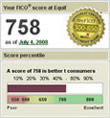
Example: As someone who regularly engages in credit card arbitrage, I frequently carrying large 0% APR balances on my 0% balance transfer credit cards. But despite my high credit balances, I maintain a stellar FICO score (FICO of 758), attributable to my low overall credit usage ratio. I might carry credit card balances in excess of $20,000 on multiple cards, but because I have over $80,000 of unused revolving credit available to me, my low proportional usage keeps my FICO high.

3) Length of Your Credit History – ( 15% Of Your FICO)

When it comes to the FICO credit score, the older the credit account, the better. That is why consumers are sometimes encouraged to initiate credit usage at an earlier age, if only for the sole purpose of building up credit. College students are sometimes advised to open at a least one student credit card for the purpose of building up a credit history file. Those who stick with cash only and wait till later in life to start opening credit accounts are ultimately short changed when it comes to their FICO scores. The same rationale is also why it is almost never advisable to cancel old credit cards. Unless you are obsessive and compulsive when it comes to credit card spending, you should keep those older cards around and let the accounts age like fine wine. You don’t necessarily have to use those cards – just put them away in a drawer if you have to. Because the length of your credit history is based on the average ages of your total active credit accounts, it’s in your best interest to keep old accounts open indefinitely. If you absolutely must cancel a credit card, cancel a newer card instead. Closing out an old account will have the unintended backfire effect of hurting your FICO credit score.

4) Types Of Existing Credit Owned – ( 10% Of Your FICO)

The FICO scoring system favors credit users who are diverse with their usage. The system likes to see users mix it up a little and not just focus on one type of installment usage – like credit cards alone. In general, older individuals with longer credit histories usually tend to have a greater mix of credit account types, thus higher scores. While revolving credit accounts like mortgages and car loans help to inject some diversity into your usage, one shouldn’t go out of one’s way to mix it up purposely. Focus more on paying all bills on time and limiting your credit usage instead (they comprise 65% of your FICO credit score). In my opinion, this category has the least relevance and the least impact on your overall credit score.

5) New Credit or Recent Credit Sought – ( 10% Of Your FICO )

This is where hard credit checks and soft credit checks come in. Everytime you affirmatively submit an application for a loan or additional credit, a hard credit pull is made against your credit report. The resulting credit pull will have a short term negative hit against your formulated FICO score (in time the score will recover). In general, new and recent requests for credit are seen as risky factors in the eyes of lenders. However, new requests for additional revolving credit that follows a recent late payment will likely cause a more significant drain against your score, as they are seen as ominous signs of financial desperation.

However, the way the FICO system is set up, frequent requests for credit within a relatively short 30 day period is discounted in terms of aggregate negative effects on your credit score. This is to compensate and alleviate the effects of those who are merely interest rate shopping for mortgages or car loans who are likely to submit numerous applications within a short period of time. This is the reason why balance transfer arbitrage seekers are often advised to submit their numerous credit card applications simultaneously within a short period of time to minimize the overall hit against their credit score. As always though, only hard credit checks negatively affect your FICO. Self credit checks initiated by you to examine your own credit report or credit score will never hurt your rating.

What Is Not Considered In Your Credit Score, And How To Boost Your FICO

While the FICO score is a very important factor to those seeking instant approval for credit or a quicker path to the best loan terms and conditions, it’s not the end all. Lenders also carefully scrutinize your credit report and other financial factors like income, job stability, education, and amount of money you have in your checking and savings accounts to determine your credit worthiness. That’s because many relevant personal risk factors are not appropriately reflected in the credit report or the credit score model compiled by the big three credit reporting bureaus. Such information include age, race, sex, income, savings, marital status, education, and your current type of housing.

The FICO score also struggles with formulating an accurate score representation for new entrants into the credit world. Those with short credit histories like recent immigrants or college students are unlikely to have much of a credit report transcript to work off of. As evidenced by the Fair Isaac Corporation’s efforts at formulating and developing its new FICO Expansion Score to gauge the credit worthiness prospects of those with incomplete or thin files, the existing FICO system as is probably still needs some improvement, and is far from perfect. However, until a better thing comes along, consumers need to find ways to improve and keep their credit ratings high. Unless you don’t have plans to seek new employment, apply for a new credit card, obtain a home mortgage loan, find a new apartment, or apply for insurance in the next few years, it’s in your self interest to improve your FICO credit score and keep it high in case you ever need to use it.

As it is relevant to your ultimate credit score, I’d recommend taking several minutes to download a free credit report at annualcreditreport.com. With this free federal government service, you get to request a single credit report from each of the three major credit bureaus every four months. Instead of requesting all three credit reports at once, you might want to stagger them out to three times a year for continuous monitoring. If you spot an error, notify the bureau (online, by phone or by mail) and the creditor (call and also send a letter) immediately. While your credit score isn’t free, there are ways to get get your free credit score from the big three credit reporting agencies. Remember, if you want consistency, stick with the FICO score exclusively for now.

Even Celebrities Can Fall On Hard Times And Face Home Foreclosure

Sunday, June 8th, 2008

When you think of Ed McMahon, you don’t exactly associate or lump him with big time wasteful spenders like MC Hammer and some of the other well known celebrities of the past who rose to fame and fortune quickly but ultimately frittered away their money into bankruptcy on trivial pursuits. No, when you think of Ed McMahon, you think of the aging but charismatic late night show announcer, the TV personality, and the face and voice of the American Family Publishing sweepstakes team (not to be confused with the more popular Publisher’s Clearing House sweepstakes) that arrives unannounced at the homes of winners to present them their grand prize. You certainly don’t see or hear about him throwing his money away on fast cars, fast women, or holding lavish sleaze parties to great excess.

So I was quite surprised when I learned that someone like the now 80 plus year old Ed McMahon has now found himself in difficult financial straits and faced with the prospect of mortgage foreclosure on his multi million dollar home. This housing bubble and credit crisis seems to be quite merciless and universally brutal, even to those who simply lived their lives with the best intentions, but still succumbed to hard times. With little regard to feelings or reason, the mortgage credit crisis and the powerful forces of housing supply and demand have devastated many good families.

Ed McMahon and His Wife Pam Speak Out About Home Foreclosure and The Possibility Of Losing Their House

Ed McMahon recently appeared on the CNN Larry King Live show (CNN video clip) with his wife to discuss their difficult foreclosure nightmare and explain how a former multi-millionaire such as himself could fall from financial grace after all these years and have his house foreclosed on. During the conversational interview with Larry King, many of Ed’s words about how it all happened rang true:

“If you spend more money than you make, you know what happens. A couple of divorces flown in – a few things happened. You want everything to be perfect, but that combination – the economy, a little injury, breaking my neck – you just can’t work with this thing around your neck.”

“In some sense, I want to speak for the million people who now have foreclosure signs on their houses. I just want to give them hope, give them optimism and some guidance. Get the best corrective people you need around you, keep working at it, don’t stop. There’s a lot of people who are hard workers, did everything right, didn’t do anything wrong, and all of a sudden they are in this boat, and I speak for all of them as far as I’m concerned.”

“For everyone out there who’s going through this, we really sympathize with you. Be optimistic. It can be done. All kinds of things can happen. Let it work out great for you.”

When asked by Larry King to comment on the public assumption that the McMahons are multi millionaires and asked how they could have fallen behind $644,000 on their house mortgage payments, McMahon’s current wife Pam chimed in (tearfully at times):

“People do assume that you have hundreds of millions of dollars, and I think over the years it’s a combination of Ed working so hard and not looking at proper management which happens a lot. Because you’re a celebrity, people think you have a lot more than you have. And you always want to take great care of all your friends and family in all you do. We didn’t keep our eye on the ball and we made mistakes.”

“But you have to not give up. Whether we keep our house or we don’t keep our house. The whole financial issue might be the thing that ruins marriages, ruins relationships – but our marriage is strong.”

“You have got to realize that you can get through it. You never know what good things can happen for you tomorrow. Keep the faith.”

My Thoughts On Upper Class Celebrities, Ordinary Middle-Class Americans, and How To Protect Oneself From The Realities Of The Recessive Economy and Housing Market

After listening to the interview, I have to say I really started to sympathize with the plight of those in foreclosure. I know Ed McMahon and his wife Pam aren’t exactly representative of the classic foreclosure case, but at least they can relate to the pains of someone who can no longer afford his or her home mortgage loan payment and compelled to face the reality of home foreclosure. It’s an embarrassing and even humiliating experience that no one wants to be forced into. Home ownership is the American dream and when you can’t afford your pride and joy any longer, it’s a tough pill to take.

As I am currently still a happy renter and have not yet become a home owner, it is in my own personal and financial interest to see that there is no housing bailout whatsoever instituted by the government. This would obviously be the most self centered and self motivated route to take as opposition to any housing foreclosure bailout or assistance would help to ensure a growth in the glut and oversupply of available homes on the market, thereby substantially driving down real estate prices for the next 2-3 years until I decide to finally enter the housing market as a buyer.

But I do sympathize with most of the owners of the more than 1 million American homes (CNN news article) that are now shockingly finding themselves in foreclosure jeopardy. Sometimes in life, you do everything right with good intentions and yet bad things still happen when you least expect it. In Ed McMahon’s case, he may have lived an early life of entertainment and celebrity success and held to great esteem in his work, earning millions of dollars through the process, but apparently he failed to adequately plan for the future and prepare himself for inevitable financial emergencies.

The reality of home ownership life is that even those with good Fico credit scores who are able to qualify for and obtain prime fixed rate loans on their houses, bad things still may happen. Sometimes through no intentional fault of their own, people lose jobs, divorces happen, child custody battles rage on, or injuries and illnesses come up making one unable to afford one’s house anymore. With a stagnating economy in recession and plummeting real estate market prices eliminating much of the home equity built up in homes, such drastic and hard financial times can hit the best of folks. Without a proper emergency fund or savings set aside to handle such occurrences, even millionaires and celebrities, let alone ordinary people like you and I, can get hit by troublesome cash flow crunches.

The solution I think is to know and realize early on that life is inherently unpredictable and fraught with financial peril. Like the stock market, no one can accurately predict the good and the bad that will happen in the future. We can only anticipate and plan for the worst but hope for the best. While there are basic financial planning steps to take, such as investing for retirement through tax deferred vehicles like a Roth IRA account, one of the most important decisions is to save and build up an emergency fund. The amount that you will need to set aside for emergencies will vary from person to person, but it’s important to plan for emergencies. For example, my car recently broke down and I had to face a sudden and emergency $1,200 auto service repair bill to replace my vehicle’s alternator and battery to get it working again. Fortunately, I had saved enough on the side to handle such an emergency occurrence and expense.

The other important thing that we should glean from the Larry King – Ed McMahon interview is to stay optimistic and keep fighting. Never give up in despair. For those who are mired in housing foreclosure, credit card debt, or even perpetual unemployment, there is light at the end of the tunnel. Don’t forget, there are many similarly situated people out there trying to stay financially afloat just like you. Just keep plugging through and maintain the faith.

Pursuing The Slowly Fading and Elusive American Dream of Home Ownership

Thursday, March 13th, 2008

It’s unbelievable how much it costs to buy a house these days. Looking at single family home prices in my area and even those located in less appealing crime ridden neighborhoods, I am just now realizing that I may never be able to afford one in my lifetime. Well, at least not the American dream home I always imagined. Not that I ever really wanted the traditional country home with the proverbial white picket fences, but somehow I always envisioned I would be closer to this dream by my late 20’s. I always figured by this time I would already be the proud owner of a brand new single family home or at least a newly constructed townhouse. So far, due to the lack of sufficient finances to match the out of control housing prices, I have not been able to attain my goal. Is this dream becoming a fantasy I wonder?

Ever since the beginning, the great American dream of prosperity and happiness has always revolved around owning a piece of land (preferably with a house on top of it). Home ownership has always been associated with security and stability. The mere act of possessing a parcel to call your own has always symbolized the triumph of moving from the unexplainable stigma of renting to a greater plane, found only on higher rungs up the economic and social ladder. But in recent years, even those who thought they had found their American dream have seen it shatter into a nightmare of swirling foreclosures and defaulting subprime loans. For prospective future home buyers like myself, we can only hope that the correcting market will find a way to prevent the dream from fading out of our financial grasps.

The Rapid Rise In Home Prices Has Almost Put Home Ownership Out Of Reach For Many

During the housing surge in 2003, I witnessed most of my older friends snap up brand new home constructions left and right. Their newly purchased homes seemed to appreciate and grow in value at an unstoppable velocity. Homeowners at the time saw their home equity surge to staggering heights in a short period of time, and many couldn’t help but bask in the financial glow of their paper net worths. But for everyone else like me looking in from the outside, it was a difficult and demoralizing time. I thought I was missing out on the greatest boom in history.

The fact that I resided in a nice Maryland suburb of Washington D.C. known for its historically high real estate prices made it even worse. Single family starter homes in areas convenient to work easily tipped the scales at $700,000 for old homes and nearly a million dollars for newer, nicer ones. These are just your basic houses, without the frills or additions. To seek out more affordable options, I would have to move further out into the distant suburban boonies of ghetto Baltimore and deal with a 2-3 hour round trip commute to D.C. everyday – a very hard pill to swallow, and one I just could not reconcile with.

The Heavens Finally Grant Us The Housing Collapse Needed To Help Bring Normalcy and Order Back To A Real Estate Market Gone Wild

It was not until the housing bubble finally popped and released its full fury that the market has finally started to regain its senses and inch its way towards equilibrium again. For the last few years I thought the American dream of home ownership was disappearing from the reach of many ordinary middle class Americans like myself. Thankfully the dream has not disappeared, but merely faded out of sight while the housing hype and hysteria rode its doomed coaster. I am utterly relieved that housing prices have finally began to make its descent back to normalcy, to better match the steady growth of jobs and employment wages.

For too many years, housing prices were inflated by irresponsible homeowners and unscrupulous subprime mortgage companies offering easy money, sped on by the Federal Reserve’s interest rate decisions. Mortgage companies aided and abetted the creation of the housing bubble by tempting highly advertised mortgage loan offers of 1% interest rates, interest only adjustable loans, pick a payment packages, and agreeing to fund home purchases for buyers with questionable credit histories. Inflated home appraisals were also a big component of what fueled the housing bubble. For years, home appraisers were pressured by mortgage originators, real estate agents, and home sellers in tandem with borrowers alike to overvalue the homes they appraised. With the unspoken collaboration of unethical home value appraisers, real estate prices soared to unchecked levels. At least one of my friends who worked as an appraiser was cognizant of the demand to keep home price valuations artificially high. Those who failed to play ball and produce the desired numbers would lose business and commissions to another appraiser willing to churn out fraudulent home valuations. This all resulted in a real estate system that soon became broken, corrupted, and in desperate need of a good shell shocking.

While I sympathize with current homeowners who are dismayed at retreating home prices, I think in the grand scheme of things, this type of market blood letting is a must for the sake of our nation’s economy and housing future. Home prices must accurately and efficiently match the supply and demand of the market, backed by the strength of jobs and wages. Hopefully, rapidly dropping prices spurred on by an ever increasing housing inventory supply will weed out the flippers and those with subprime credit who irresponsibly bought too much home than they could reasonably afford.

My Housing Plans and Recommendations For The Future

For now I plan to rent an apartment for the foreseeable future, at least until my life takes a turn (marriage etc). I still hold on to the American dream of home ownership, but for now that dream will have to wait until market prices settle. Fallout from the credit crisis and subprime mortgage debacle will take years to sort out and run its course. But looking at the high cost of home prices today, I also know that so long as I remain single and rely solely on my own income, my dream of owning a single family house will not be possible. The American economic system was simply not designed for single middle class individuals – only through pooled resources as a married team can a couple afford a home.

But for everyone out there who is not head over heels in debt and has a good FICO credit score with a solid credit history, now is an attractive time to be a prospective home buyer. Today’s market is definitely a buyer’s market. Home prices are more reasonable now that interest rates are low again. But I think most people should still hold out. While bidding competition from investors is currently very low because there are few buyers, there are still many more significant price drops to be had. Don’t believe anything you hear from delusional housing market pundits like the National Association of Realtors.

Unless you can successfully get the home seller to accept a low ball offer that is substantially less than the listed price, I would recommend that buyers wait at least 2 more years until 2010 before they even consider buying a home (renting is not as terrible as some people seem to think). As always, don’t buy more home than your current stage in life requires and always buy within your means. The general rule of thumb is that most prospective homeowners can afford to mortgage a property worth 2 to 2.5 times their annual gross income. Obviously it’s much easier to afford a home mortgage when you are married with two income streams than it is on just one single person’s paycheck. If I had prematurely jumped into the house buying craze years ago, I would probably now be owning an upside down mortgage on an overpriced home rapidly losing its value, and struggling with mortgage payments.